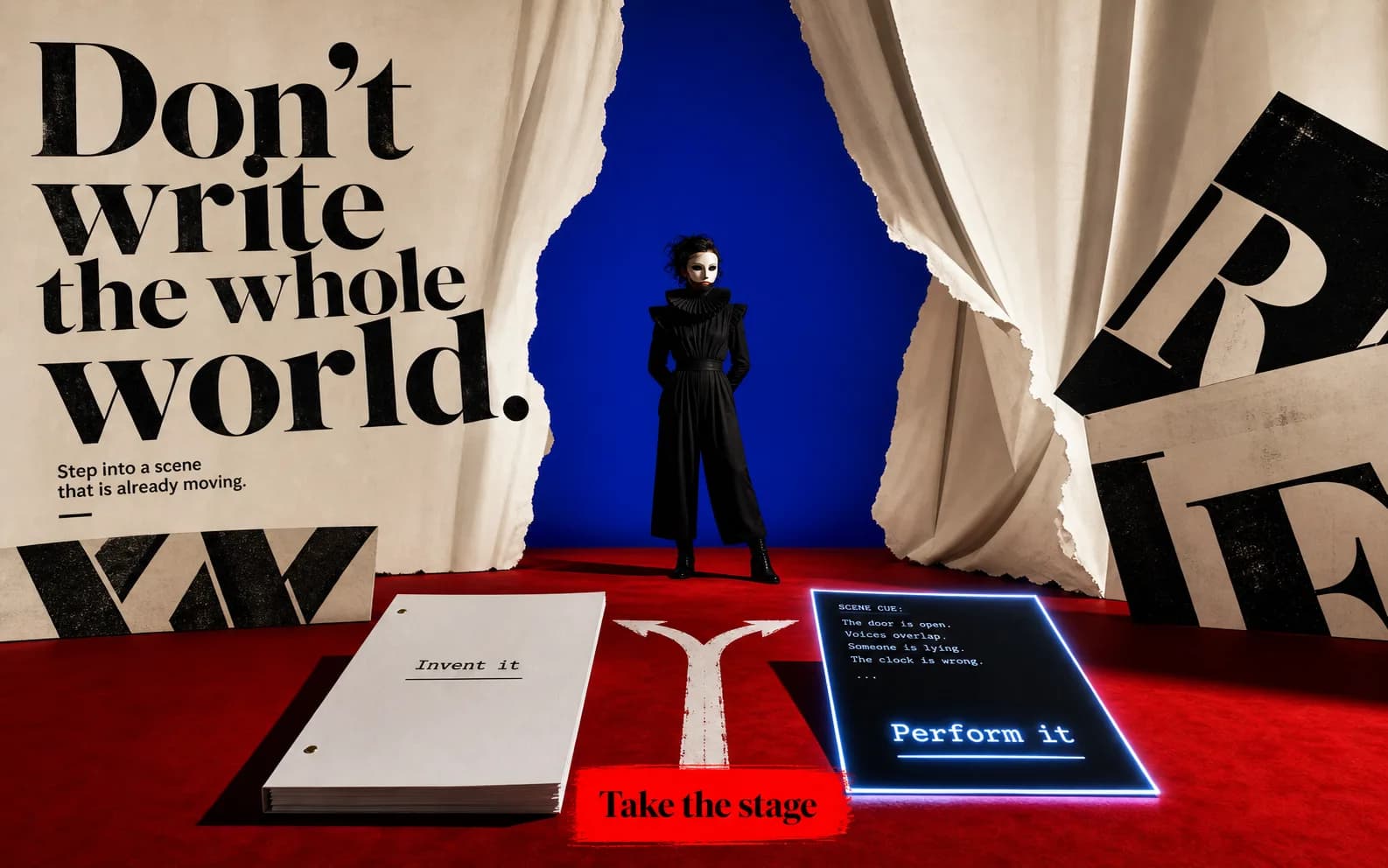
An original theatrical scene with a performer, split curtains, and two ways into a story.

PROMPT FIRST / STORY FIRST

AI Roleplay Prompt vs Existing Story

Use a custom AI roleplay prompt when you want to author the premise yourself. Choose an existing story when you want a situation already in motion, a character role to step into, and a clear reason for the first line. The useful choice is not which option is universally better; it is which kind of beginning you want today.

Take the stage

ACT 0 / PICK A CUE

Choose the kind of first move you want.

This is not a test of creativity. Pick the responsibility you want for this session, then take the smallest useful next step.

What sounds better right now?

Choose a cue above. The stage will show your first move.

YOUR FIRST MOVE / PROMPT-FIRST

Write four things, then stop.

  1. Name an original place.
  2. Choose the role you want to play.
  3. Add one pressure to the moment.
  4. End with one unanswered question.
Read the prompt-first route

ACT I / THE CHOICE

Do you want to set the scene, or step into it?

01

Start with the decision, not a blank screen

The phrase AI roleplay prompt can describe two different jobs. Sometimes you want to invent the premise: choose the setting, decide who is present, and state the conflict in your own words. Other times you do not need more options; you need a scene that already gives you something to answer. That is the practical difference between a custom prompt and an existing story. A prompt is an authorship tool. An existing story is an entry point. Before you write anything, ask which responsibility sounds appealing right now: designing the situation or performing inside a situation that already has a shape. This one question prevents a common false start, where a person searches for prompts even though what they actually want is a role and a first moment to react to.

02

Choose a custom prompt when the premise is the point

A custom prompt fits when you want to make the central creative decisions before roleplay begins. You may have an original setting, a relationship dynamic, a mood, or a problem you want to explore. In that case, writing the opener is part of the enjoyment. Give the premise a place, a role, a pressure, and one unresolved question. Keep it original rather than borrowing a famous character or fictional world. The useful test is simple: if you would feel disappointed not to decide the opening conditions, a prompt-first path is probably right for this session. This page does not claim that the featured experience generates prompts or accepts any particular prompt format. It only separates the creative job of authoring a setup from the different job of entering a prepared story.

03

Choose an existing story when you want to perform sooner

An existing story is useful when the hardest part is getting past the empty beginning. A plot can put a question, interruption, or decision in motion before you speak. The approved story-led format starts each playable experience from an existing plot rather than an empty chat box. You then choose from the characters available in that story. That does not remove your contribution; it gives your contribution a place to stand. Instead of deciding every piece of context, you can ask what the selected character notices, wants, fears, or needs to do in the immediate moment. The product is an AI voice cosplay and roleplay experience built around acting inside a story, so this path is about participation in a prepared premise rather than a promise about a particular voice technology.

04

Use a three-step story-first entry path

First, read the opening situation and identify one fact that needs a response. It might be a message, an arrival, a missing object, or an unanswered question; keep the example general and original. Second, review the available roles and choose the character whose point of view you want to perform. Each role belongs to the featured plot, which gives the choice immediate context. Third, respond from that role with one observation, question, or decision. You do not need a full biography or a perfect speech. The team behind the experience has previously built AI interactive-fiction and simulator experiences, and that background supports a story-first way of combining context, role selection, and participation. For a fuller first-scene checklist after you choose this path, read the how to start AI roleplay guide.

05

A quick rule for choosing your path

Use this short comparison before you begin. Choose a prompt if you want to own the premise, enjoy specifying the conditions, and have a particular original idea you want to set in motion. Choose an existing story if you want the premise to arrive with context, prefer selecting a perspective over designing a world, or want to respond to a moment already happening. You can switch paths on different days; neither is a test of creativity. The important part is matching the starting format to the task in front of you. If you choose the story-first route, enter with an open question and let the role give your first response a direction. Then use the story entry to see whether that form of participation fits what you were looking for.

INTERMISSION

The best starting point is the one that gives you something to do next.

01Do I need to write an AI roleplay prompt before I can start?+

No. A prompt is useful when you want to author the premise. If you prefer a situation that is already in motion, an existing story can provide the opening context before you choose an available role.

02Does an existing story leave room for my own roleplay choices?+

It gives you a prepared plot and a role to perform, then your chosen character supplies a point of view for the scene. Your first response can be an observation, question, or decision from that role.

03What should I do after choosing the story-first path?+

Read the opening situation, select an available character, and respond to one immediate detail or unresolved question. The related how-to-start guide offers a more detailed first-scene checklist.